
Will Small Format Stores In Repurposed Real Estate Return Floor & Decor To Comp Sales Growth?
Most newly opened Floor & Decor stores are in repurposed real estate that is 1/3 the size of the Company’s legacy prototype; will smaller stores in new markets return the Company to comp sales growth?

This past week Floor & Decor FND 0.00%↑reported a decline in comparable sales for the second straight quarter.
But the 2.1% comparable sales decline in Q2 2026 was an improvement over the negative 3.7% rate the retailer posted in Q1 2026.
Still Floor & Decor projects that comparable sales will likely be negative for all of 2026.
Will 2027 be a better year for the flooring retailer?
An improved housing market would likely be the most important catalyst.
But future quarterly results will also include more of Floor & Decor’s recently opened stores in the comparable base.
Like the 20 new stores that the flooring retailer added in 2025 and, eventually, the 20 additional stores it is opening in 2026.
These new store classes are quite different than many of the 286 warehouse-style stores that Floor & Decor operates across the U.S.
Because they are much smaller.
The new stores that Floor & Decor opened in 2025 and 2026 are, on average, ~55,000 square feet, substantially smaller than the retailer’s legacy ~80,000 square foot real estate prototype.
Floor & Decor is utilizing this smaller store format to enter secondary markets and increase store coverage in high density areas.
They are also expected to save the Company millions in new store development costs.
Floor & Decor expects to spend ~$7.5-$8 MM to open a new store in 2026, much lower than the ~$12 MM that the retailer spent to open a new store in 2023.
While some of these cost savings are due to the smaller size of the new sites, there is also another reason why these stores are more economical:
Nearly all of them are located in 2nd generation real estate.
In fact all 5 of the Company’s new store openings in Q2 2026 were in repurposed Big Box retail space.
Most stores that Floor & Decor opened in 2025 were also in smaller format buildings previously occupied by Big Box retailers, grocery stores and even theaters.
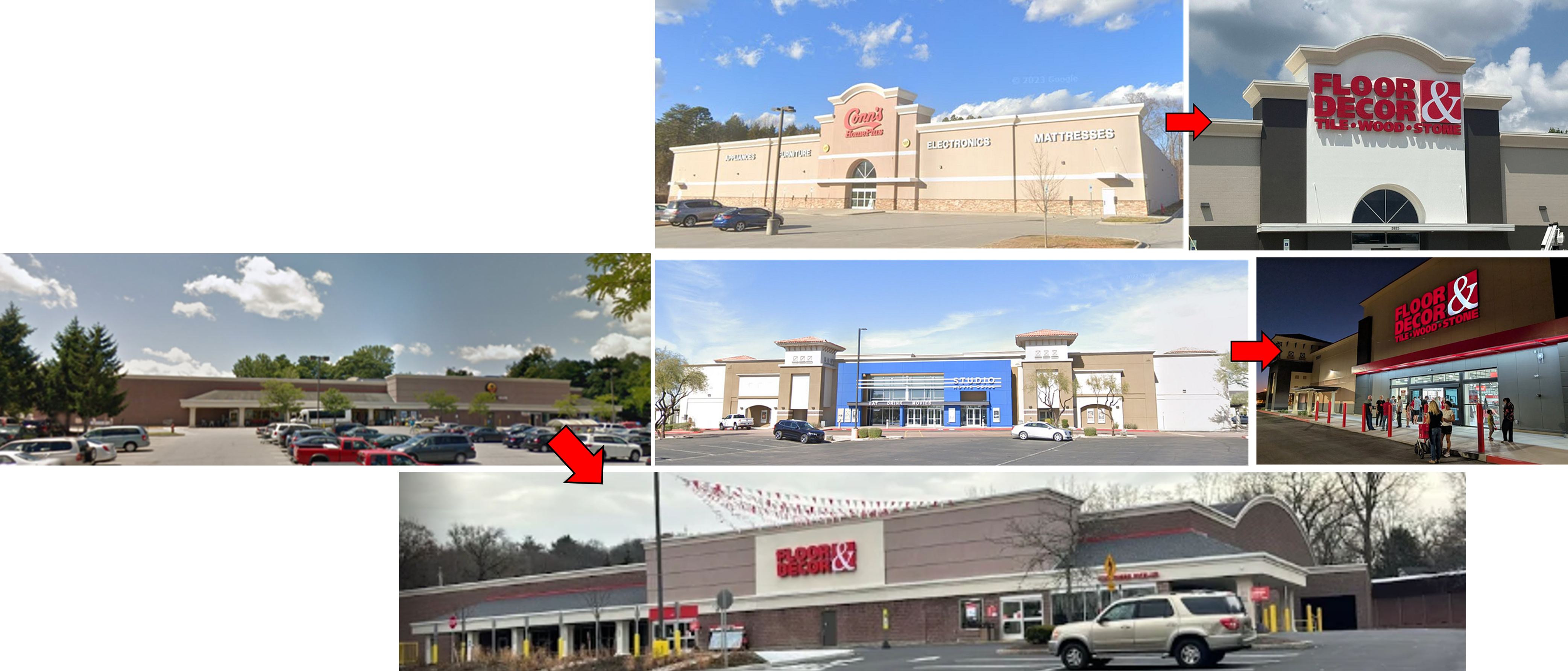
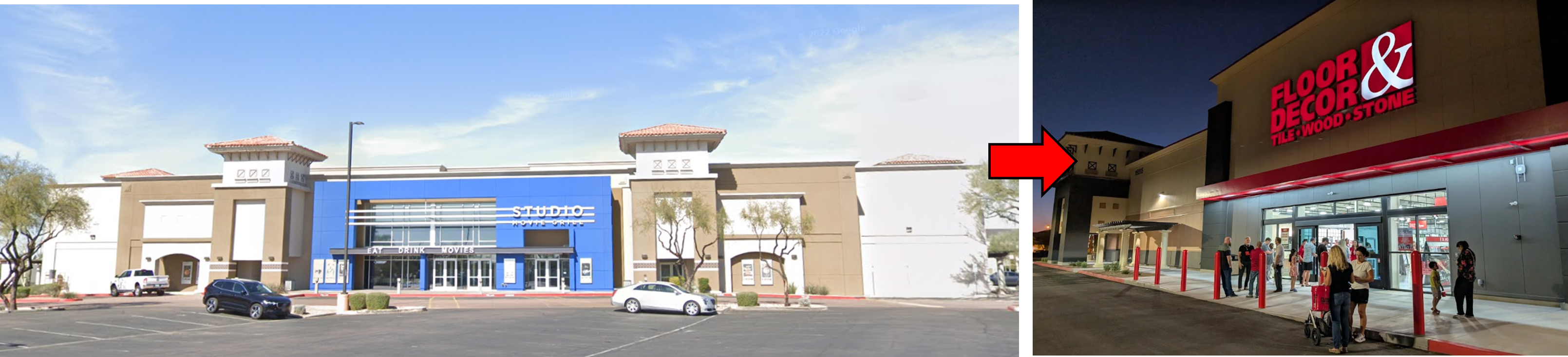
These new—and smaller—Floor & Decor stores in repurposed sites include:
A ~45,000 square foot store in a former Conn’s HomePlus in Winston Salem, NC
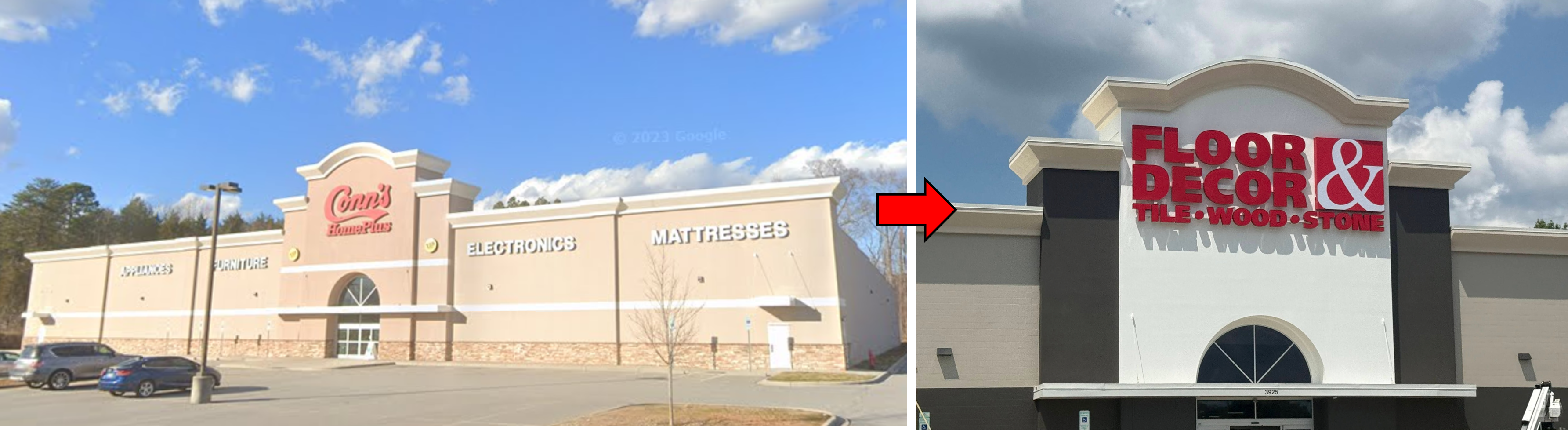
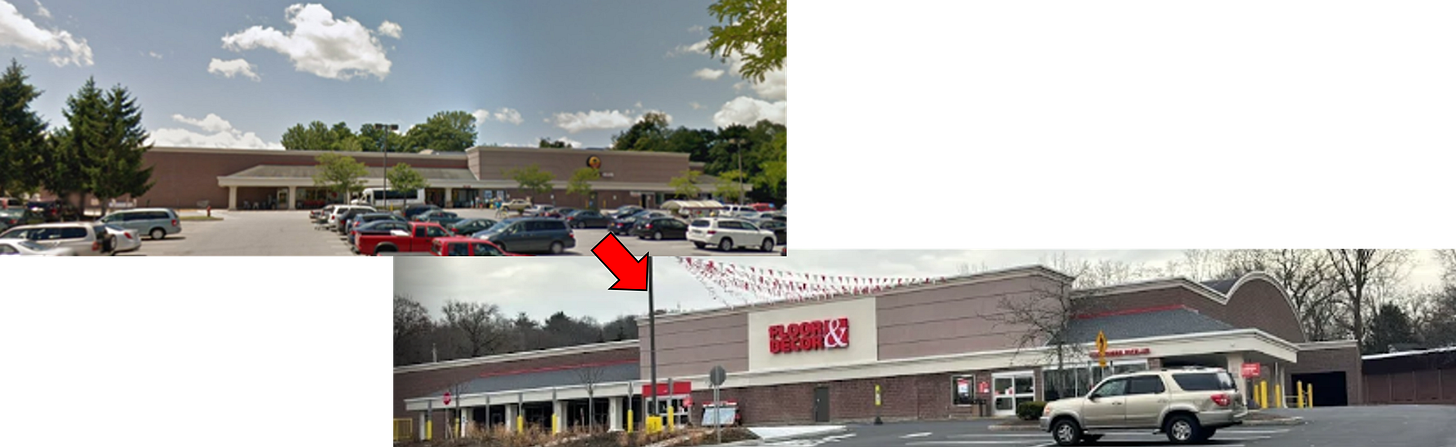
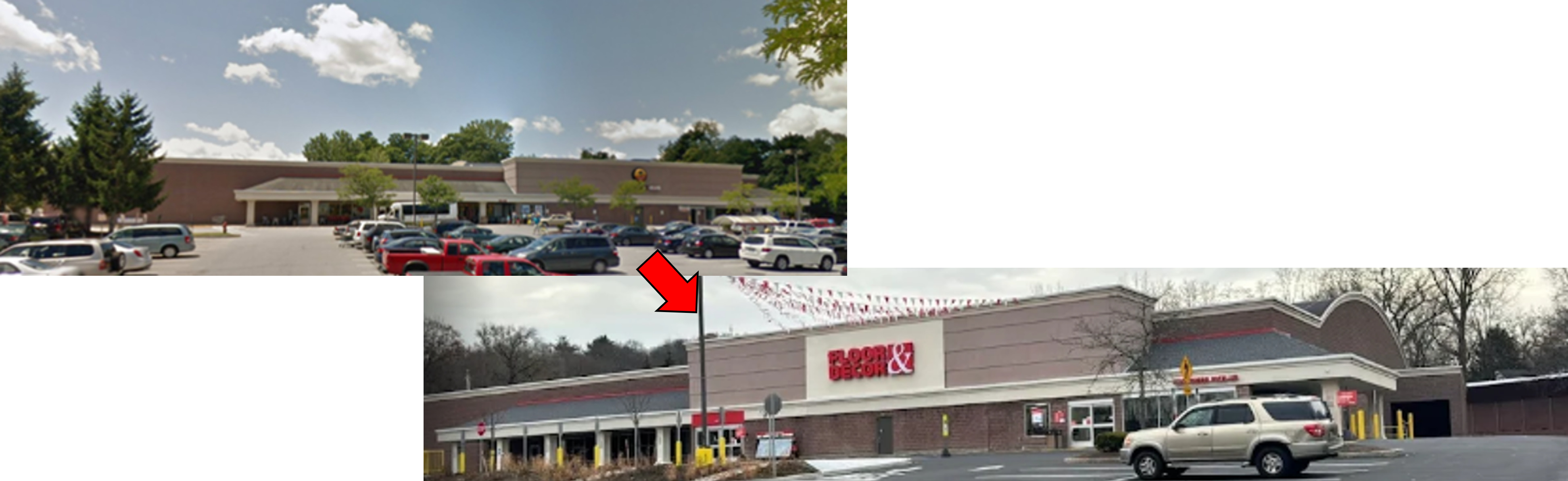
A ~55,000 square foot ex-ShopRite grocery store in Cortlandt Manor, NY; and
A ~41,000 square foot converted Studio Movie Grill theater in Scottsdale, AZ
Floor & Decor’s new 2026 stores also include some that are located in small markets.
Like a new store that Floor & Decor opened last February in a repurposed former Conn’s HomePlus furniture store in Fayetteville, NC.
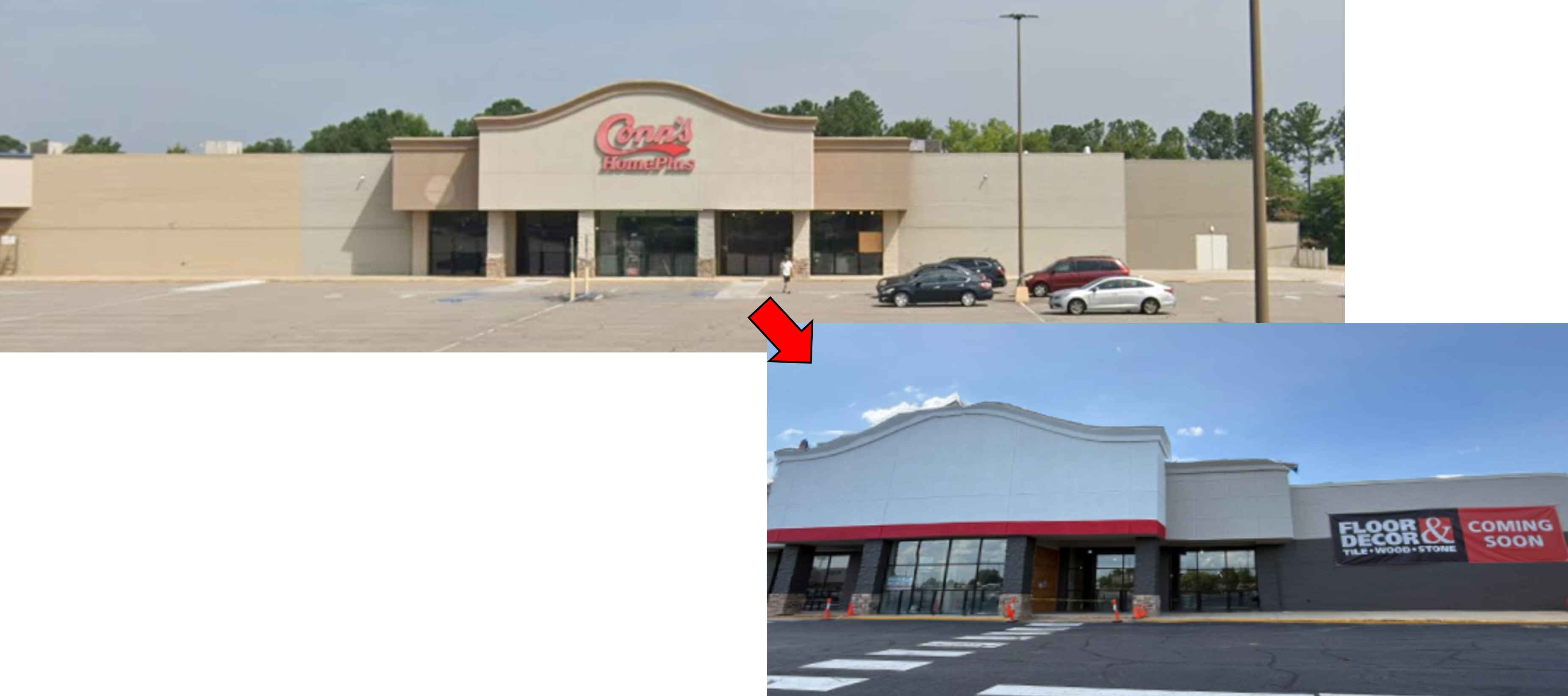
Floor & Decor considers Fayetteville, NC, with a metro area population of less than 400,000 people, as a “Tier 3” market.
Still many of Floor & Decor’s 2026 openings are in larger Tier 1 and Tier 2 markets where new stores tend to generate higher sales volumes.
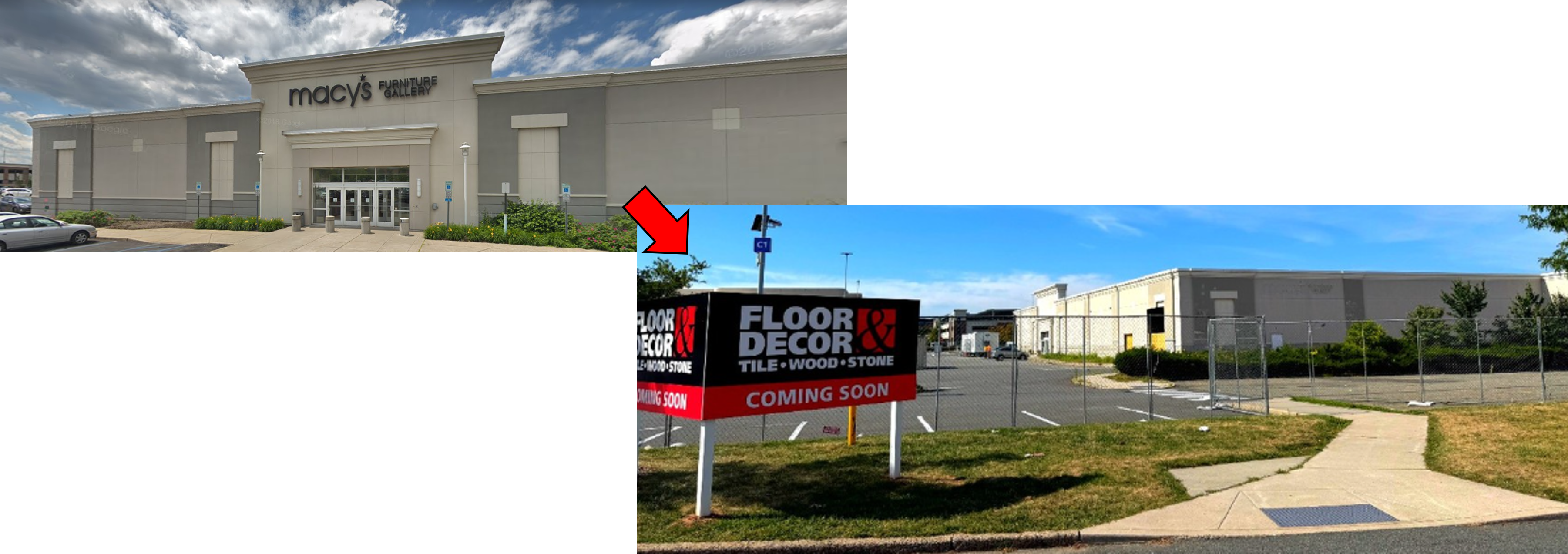
One example is a recently opened Floor & Decor store in Staten Island, NY, a Tier 1 market.
This Floor & Decor Staten Island, NY store is located in a ~50,000 square foot former Macy’s Furniture Gallery.
Another benefit of Floor & Decor’s use of 2nd generation real estate?
Stores in repurposed space opened in a fraction of the time that it would have taken had the retailer opted for new, ground-up construction.
As a result Floor & Decor’s increased reliance on 2nd generation real estate has resulted in both lower cost and faster-to-access stores.
Of course Floor & Decor is not the only retailer that is saving money and time by locating new stores in repurposed real estate.
Off price and discount retailers like Burlington Stores BURL 0.00%↑, Ollie’s Bargain Outlet OLLI 0.00%↑, and Dollar Tree DLTR 0.00%↑utilize 2nd generation real estate for nearly all of their new stores.
These retailers also frequently backfill suites that were previously occupied by their competitors—which provides both a real estate and market share capture opportunity.
These “warm” spaces vacated by competitors often come with customers of the former occupant and tend to result in highly productive and profitable new stores.
However none of Floor & Decor’s new stores benefit from this setup.
Floor & Decor’s repurposed sites like former furniture stores, grocery stores and movie theaters may be in good locations.
But the flooring retailer is not likely to attract grocery store shoppers or customers of the movie theater.
Nor will it benefit from a direct business or market share capture opportunity.
So while 2nd generation real estate may provide Floor & Decor with lower cost and easier-to-access real estate, it is not likely to impact new store productivity.
Or at least not to the same degree as if the previous occupants had sold hard surface flooring, installation materials or tile!
Of course if Floor & Decor were to find 2nd generation space recently vacated by direct competitors like Home Depot, Lowe’s, The Tile Shop or LL Flooring…
Well that could offer repurpose opportunities that not only provide low cost real estate but also a built-in customer base and enhanced new store productivity.
In any event smaller—and less expensive—new stores are in Floor & Decor’s plans for the rest of 2026 and beyond.
The key question is whether these new small format stores will increase Floor & Decor’s market penetration, bring in new customers and help return the Company to printing positive comparable sales.
Or if they instead cannibalize existing stores, bring down average sales and profit per store and act as a drag on the Floor & Decor network.
The answer will soon be clear.